Independent veterinary care
Understanding irritation and recurring problems
Itching, redness, ear problems and changes to the coat can have different causes. A veterinary consultation helps assess symptoms and whether tests or treatment are appropriate for your pet.
Care and treatment decisions are always based on an individual assessment. Contact the clinic to discuss your pet and confirm appointment availability.
Skin, ear and coat problems we help with
Skin problems are one of the most common reasons pets come to see us. Itching, redness, hair loss, sore patches, lumps, scabs, flaky skin and smelly or itchy ears can all have different causes, and many problems look similar on the surface. Getting to the cause is the key to treating them properly.
The conditions we diagnose and treat include allergic dermatitis, bacterial skin infections, alopecia (hair loss), keratinisation disorders that affect how the skin renews itself, and polyps. We see skin problems in dogs, cats, rabbits and other pets.
What causes skin problems
Allergies are a common cause. Pets can react to fleas, pollen, dust mites, certain foods and other things in their environment. Skin problems can also be caused by infections, parasites such as fleas and mites, hormonal imbalances and other underlying health conditions. Lumps, bumps or sores that do not heal should always be checked by a vet, because sometimes they can be a sign of something more serious.
Good parasite control is an important part of prevention, and it is included in our pet wellness plans.
How we investigate
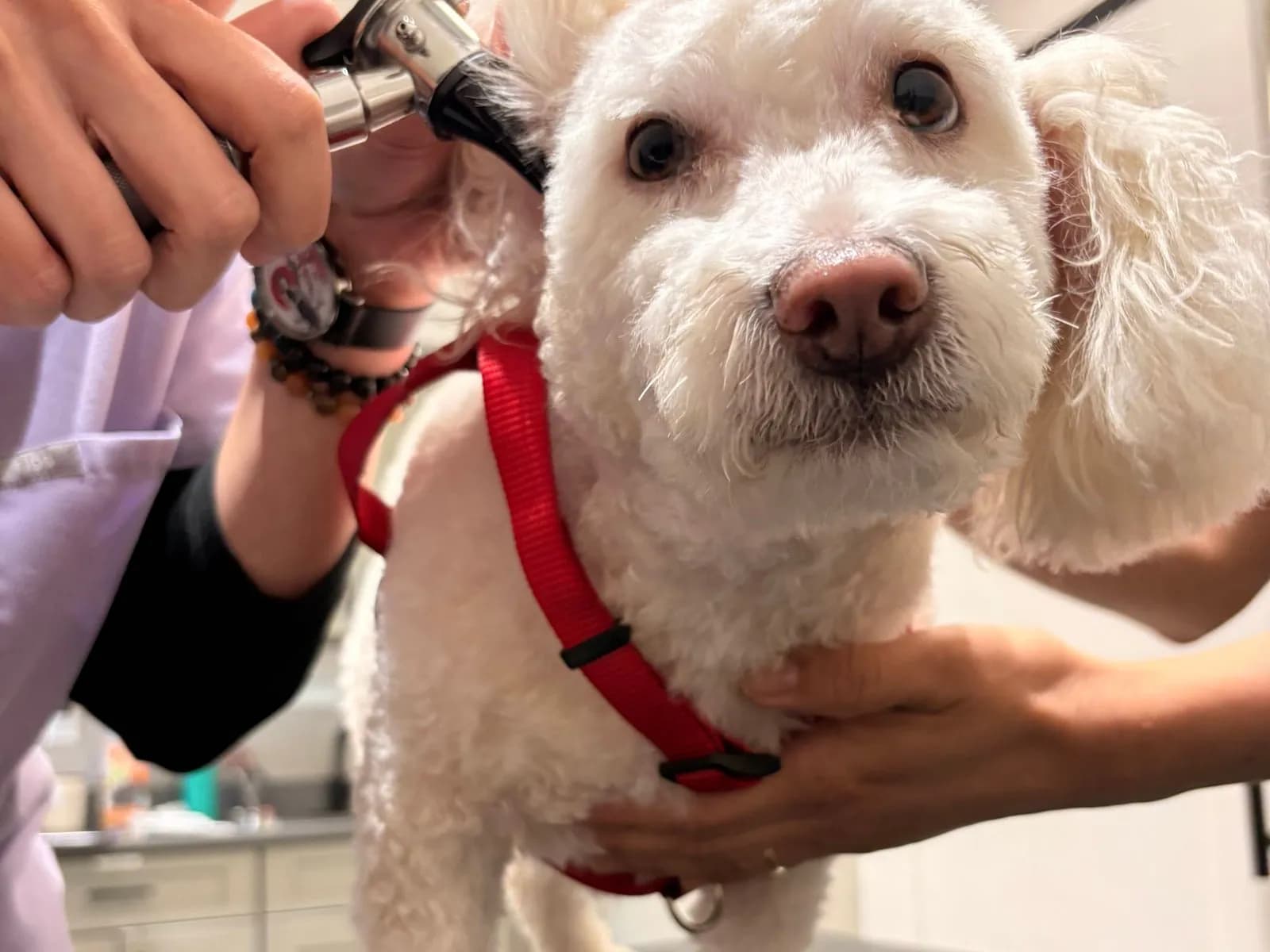
It starts with a vet consultation. Your vet will ask about when the problem started, whether it comes and goes, your pet's diet and parasite treatment, and examine the skin, coat and ears.
Depending on what they find, your vet may recommend diagnostic tests such as skin cytology, which looks at cells and bacteria under the microscope, an ear swab, allergy testing or a biopsy. We will explain what each test could show, and its cost, before going ahead, and we will only recommend the tests your pet actually needs.
Treatment and long-term care
Some skin problems clear up with a single course of treatment. Others, such as allergies, need managing over the long term. Your vet will put together a treatment plan for your pet, which may include medication, medicated shampoos, ear treatments, diet changes and parasite control, and will arrange checks to see how your pet is responding.
Long-term conditions often need repeat medication, which can be supplied through our pet pharmacy. Scooting and licking under the tail can also be a sign of anal gland problems.
Keeping a skin diary
Skin problems can be frustrating, because they often come and go. A simple diary can help your vet a great deal: note when your pet scratches or licks most, what time of year flare-ups happen, any changes to food, treats, washing powder or bedding, and when you last gave flea treatment. Photos of red patches or sore areas on a bad day are also useful, as skin can look quite different by the time of the appointment. Keep up with flea treatment for every pet in the household, as one untreated pet can keep the problem going for all of them.
Common questions
What allergies cause skin problems in pets?
Common triggers include fleas, pollen, dust mites and some foods. Your vet will help you work out which are likely for your pet.
Can skin problems be a sign of something serious?
Sometimes. Lumps, bumps or sores that do not heal should always be checked by a vet.
Will my pet need lots of tests?
Not necessarily. Your vet will start with the simplest useful steps and explain the reason for any test before going ahead.
How much does dermatology treatment cost?
It depends on your pet's needs. See the costs section below, and your vet will give you an estimate.
Costs and estimates
Dermatology: Contact us for pricing
Dermatology treatment cost will vary based on each individual animals requirements.
Individual estimates can vary depending on your pet and the care required. Please confirm your estimate with the practice before treatment.