Independent veterinary care
Imaging when it adds useful information
Diagnostic images may help a veterinary team assess injuries and other health concerns. Talk to Ironstone about whether imaging is appropriate for your pet, the type of assessment required and an individual estimate.
Care and treatment decisions are always based on an individual assessment. Contact the clinic to discuss your pet and confirm appointment availability.
Imaging we offer
Diagnostic imaging lets us see inside your pet's body without surgery. We offer X-rays and ultrasound scans in-house, including abdominal ultrasound and echocardiograms (ultrasound scans of the heart). If your pet needs a CT or MRI scan, we can refer them to a specialist centre and help arrange it.
We provide imaging for dogs, cats, birds, rabbits and small furries.
When imaging is useful
Imaging is most useful when an examination raises a question it can answer. X-rays are good for looking at bones and joints, such as a suspected fracture or a limp, and for the chest and abdomen, for example if a pet may have swallowed something it should not have. Ultrasound shows soft tissues and organs in more detail, and an echocardiogram looks at the structure and function of the heart, for example if your vet hears a heart murmur.
Imaging often works alongside diagnostic tests such as blood and urine tests, and can help plan orthopaedic surgery or other pet surgery.
What happens on the day
For X-rays, pets need to lie completely still in exact positions, so most need sedation or a general anaesthetic. That keeps them comfortable and gives clear images. Ultrasound scans are often possible with your pet awake or lightly sedated, and may need a small patch of fur clipping so the probe makes good contact with the skin.
If sedation or anaesthetic is likely, we will give you fasting instructions and your pet will usually be admitted in the morning. We will phone you when your pet is awake and ready to go home.
Results and next steps
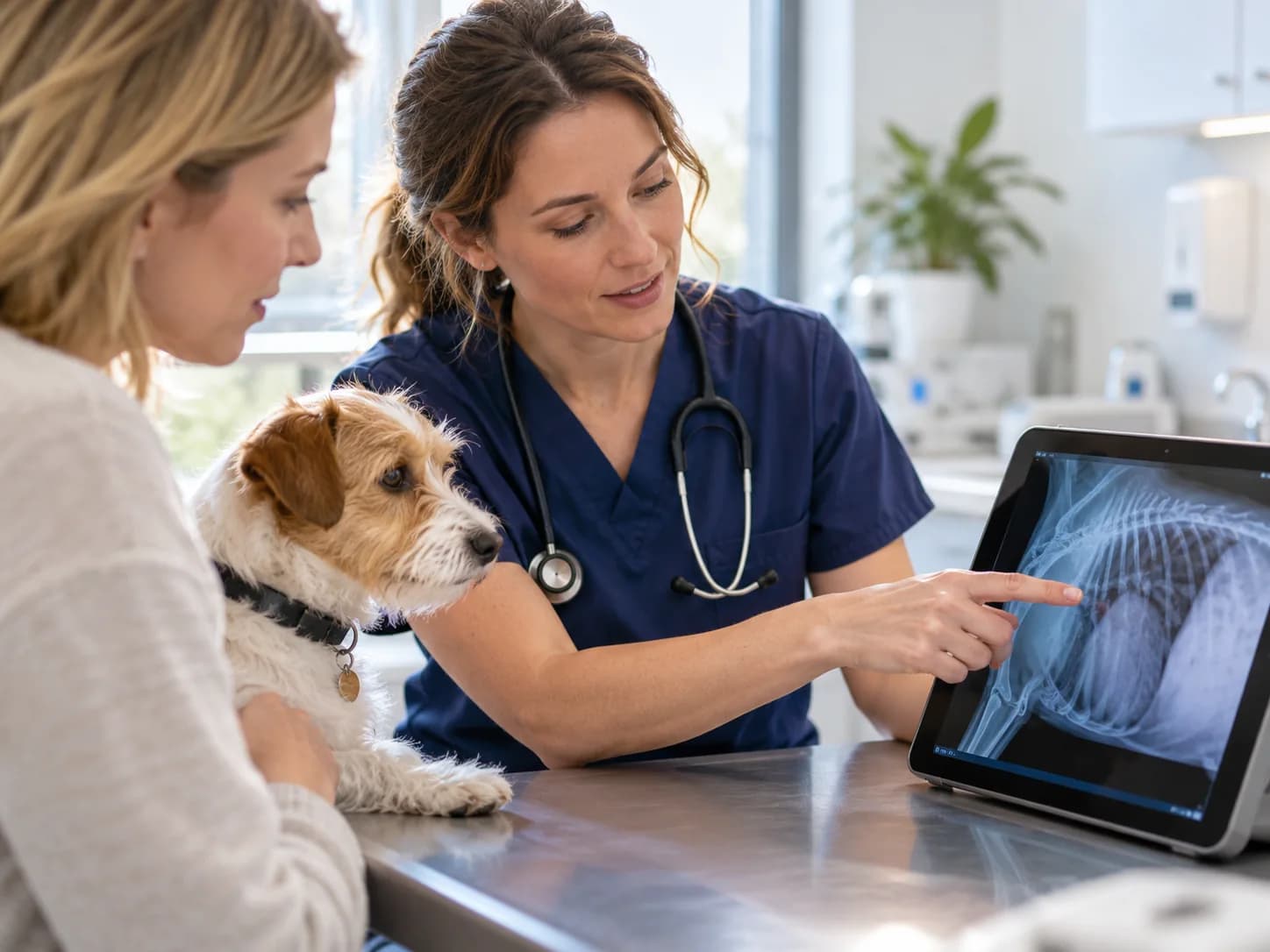
Once the imaging is done, your vet will explain what the images show and talk through the next steps, whether that is treatment, further tests or a referral. If a specialist opinion would help, we will discuss the options with you.
Your pet may be sleepy after sedation, so keep them quiet and warm for the rest of the day, offer a small meal in the evening and call us if you are worried.
Preparing for an imaging appointment
If your pet needs sedation or an anaesthetic, we will tell you when to stop food the night before, and water can usually be left down unless we say otherwise. Let us know about any medication your pet takes. Please bring any previous X-rays or scan reports from another practice, as comparing images over time can be very useful. If your vet is investigating a problem that comes and goes, such as a cough or a limp, a short video on your phone can help them decide what to image. And if your pet is very nervous, tell us when you book, so we can plan their time with us.
Common questions
Will my pet need to be sedated?
Most pets need sedation or a general anaesthetic for X-rays. Many ultrasound scans can be done with less sedation. Your vet will advise.
Do you do CT and MRI scans?
We do not offer CT or MRI at the practice, but we can refer your pet to a specialist centre.
How much does imaging cost?
Published imaging fees are shown below and on our vet prices page, and your vet will confirm an estimate before going ahead.
Does insurance cover X-rays and scans?
Most policies cover imaging for a new illness or injury, but check your policy.
Costs and estimates
Abdominal ultrasound (full): £200.00
Does not include sedation/general anaesthetic.
Abdominal ultrasound (single organ, point of care): £95.00
Point-of-care scan of a single organ.
Diagnostic Imaging: Contact us for pricing
The cost of diagnostic imaging will always be quoted based on the tests carried out.
Echocardiogram: £200.00
X-ray: £420.00
Includes sedation/general anaesthetic and 3 images.
Individual estimates can vary depending on your pet and the care required. Please confirm your estimate with the practice before treatment.